
English| USD
Suggested for you
More currencies
Choose a language
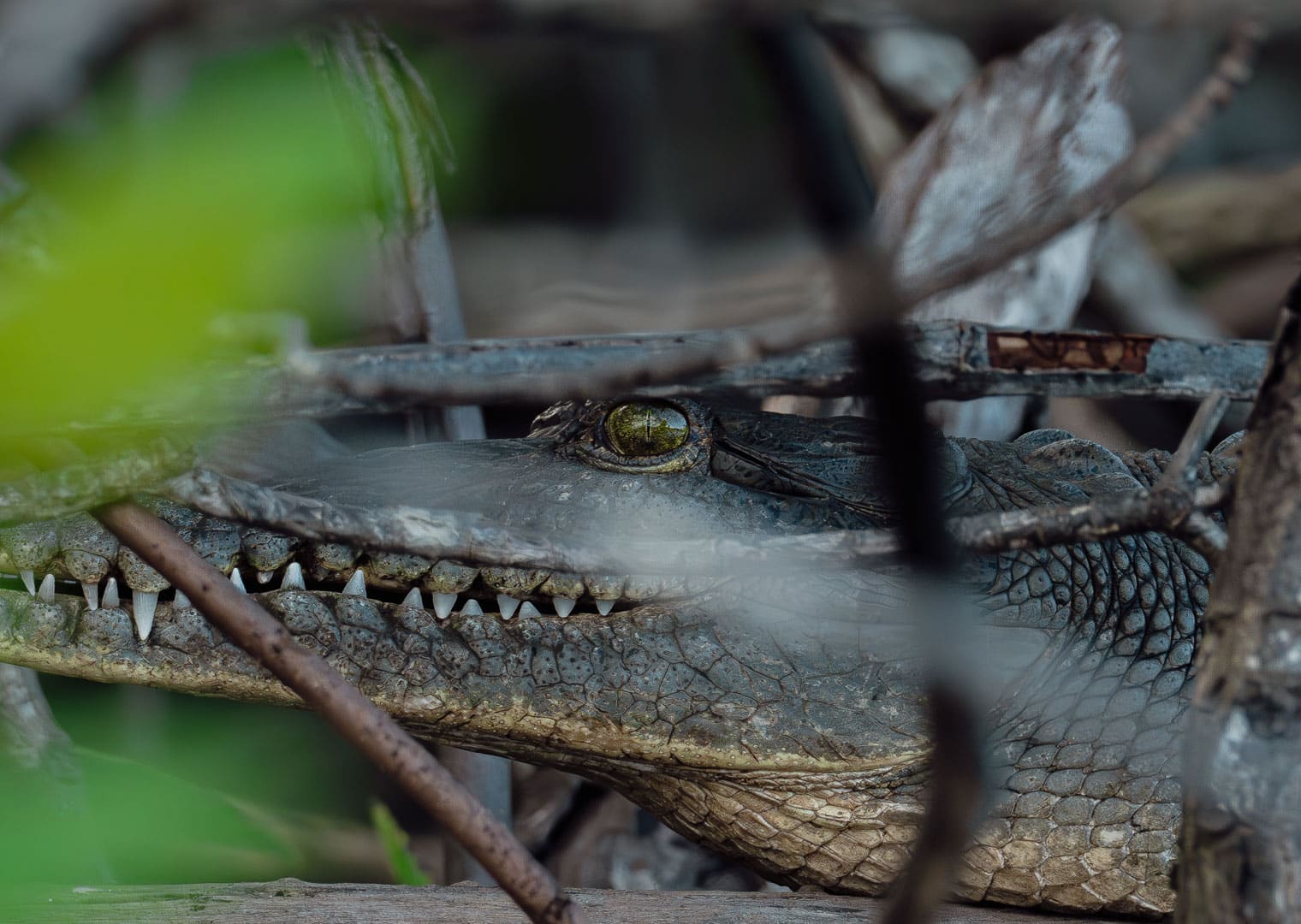
The Tamarindo Estuary shelters one of Costa Rica's most reliable populations of American crocodiles, visible year-round from kayaks, paddleboards, and the riverbank. Understanding their behavior and habitat boundaries keeps encounters safe and rewarding. This guide answers the core question and explains what to expect on the water.
Quick answer
Yes, American crocodiles live in the Tamarindo Estuary year-round, with the largest concentration in the mangrove channels near the river mouth. Adults measure 3 to 4 meters and are most visible during low tide when they bask on mudflats and exposed roots. They are generally docile toward humans but require distance—guides recommend staying at least 3 meters away during kayak tours.
The American crocodile adapted to brackish water millions of years before the Central American land bridge formed, and the Tamarindo Estuary remains one of the few coastal wetlands where the species thrives without human conflict. Crocodiles in Tamarindo spend their days regulating body temperature on exposed mangrove roots, hunting at dawn and dusk, and retreating to deeper channels when the tide rises. Low tide exposes the mudflats and shallow creeks where crocodiles gather to bask, making early morning the most productive window for sightings. The reptiles rely on external heat to metabolize food, so they position themselves in direct sunlight along the estuary's eastern bank between 7:00 and 10:00 AM. By midday they submerge or move into shaded root tangles, reducing visibility from boats. The estuary crocodiles coexist with boat-billed herons, white ibis, and roseate spoonbills in a tidal system protected within Marino Las Baulas National Park. Rangers monitor the population and enforce no-wake zones to prevent nesting disruption. Tour operators navigate the main channel and tributary creeks, pausing where crocodiles are visible but maintaining the buffer distance required by park regulations. Visitors asking are there crocodiles in Tamarindo often worry about beach safety. The reptiles occupy the estuary and river mouth but avoid the open surf zone where waves and salt concentration exceed their tolerance. Recorded beach encounters remain statistically negligible. The river mouth at Playa Grande marks the boundary—swimmers stay north of the sand spit, crocodiles stay in the brackish channels. Understanding this spatial separation allows both species to share the coastline without incident.
“The estuary crocodiles coexist with boat-billed herons, white ibis, and roseate spoonbills in a tidal system protected within Marino Las Baulas National Park.”
The Tamarindo Estuary is home to a population of American crocodiles, which are a natural component of the local ecosystem within Marino Las Baulas National Park.
The American crocodile, Crocodylus acutus, thrives in the mangrove ecosystems of the Tamarindo Estuary, which provides essential brackish water conditions.
Adult American crocodiles in this region commonly reach lengths of 3 to 4 meters, though some individuals may grow larger depending on age and resources.
The American crocodile is a native species protected under Costa Rican wildlife laws, which prohibit the harassment or feeding of these reptiles.
The estuary provides a vital nursery for crocodiles, utilizing the complex root systems of the mangroves for shelter and hunting small fish and crustaceans.
As ectotherms, crocodiles are frequently observed on the banks of the estuary basking in the sun to regulate their body temperature after time spent in the water.
While often seen resting during the day, American crocodiles are primarily nocturnal hunters that utilize their highly developed senses to track prey in low-light conditions.
The best arrival window for wildlife spotting is 07:00–11:00, as tours are tide-dependent and early morning low tides provide the best crocodile viewing.
Sunny, 28–33°C. Ideal for consistent low tide observation.
Humid, 25–30°C. Frequent afternoon rain showers.
—; Early morning hours facilitate quieter access to estuary habitats.
Verdict: The best time for crocodile spotting is any day between 07:00 and 11:00, particularly during months with consistent low-tide cycles.
The Tamarindo Estuary is open to visitors daily throughout the week. Access remains consistent regardless of the day.
Access to the Tamarindo Estuary in Marino Las Baulas National Park is free of charge. Fees only apply when choosing to book an organized boat tour to navigate the estuary.
Verdict: A typical adult pays 0 USD for estuary access, with costs only incurred if booking a private boat tour.
The Tamarindo Estuary is located within Marino Las Baulas National Park in the Guanacaste province. Most visitors arrive at the estuary access point via the main road entering Tamarindo.
Follow Route 152 into central Tamarindo; head north toward the estuary entrance.
Request a drop-off at the Marino Las Baulas National Park estuary access point.
Walk north along the beach past the main Tamarindo surf area to the estuary mouth.
Utilize local water taxi services from the southern bank of the estuary.
The estuary entrance is situated at the northern end of Tamarindo Beach. Arriving by foot or car requires proceeding toward the Marino Las Baulas National Park border, which marks the protected zone.
Crocodile sightings in the Tamarindo Estuary require strict adherence to safety protocols. Following guide instructions and maintaining distance protects both visitors and wildlife.
Everything you need to know about are there crocodiles in tamarindo
Yes, the Tamarindo estuary is home to a healthy population of American crocodiles. These reptiles use the mangrove channels as a primary habitat, making them a common sight during guided excursions. Seeing these animals in their natural environment is a highlight for many visitors interested in local biodiversity. Because wild animals inhabit this space, it is important to understand if there are crocodiles in Tamarindo and how to view them safely.
Kayaking is a popular way to observe the estuary, and professional guides maintain a respectful distance from wildlife to ensure safety. Guides are trained to spot crocodiles and navigate the mangroves, providing a secure way to experience the area. By keeping distance and following instructions, guests can observe the ecosystem without interfering with these natural predators.
The entrance fee to the estuary is 0 USD, meaning there is no charge for general access. However, fees apply only if booking a private boat tour to explore the national park. You can enjoy the surrounding beauty of the area for free while respecting the natural boundaries.
The best arrival window for viewing wildlife is 07:00–11:00, as tours are tide-dependent. Early morning low tides typically provide the best conditions for crocodile viewing in the mangrove roots. This timing allows visitors to see the estuary at its most active and accessible state.
While crocodiles inhabit the mangrove estuary, it is very rare to find them in the open ocean waters of the beach. Most crocodile sightings are restricted to the brackish water of the river mouth and the mangroves. If you are wondering if there are crocodiles in Tamarindo beach swimming areas, the answer is generally no, but the estuary is their primary home.
Yes, you can access the estuary area, but booking a tour is recommended for the best experience and safety. Guides provide insight into the mangrove ecosystem and help locate wildlife that might otherwise be missed. Always check the official opening hours of 07:00–17:00 before planning your visit to the park.